

How to 10x Your Productivity With AI Using Mental Models
In 2025, context engineering blew up as a skill:
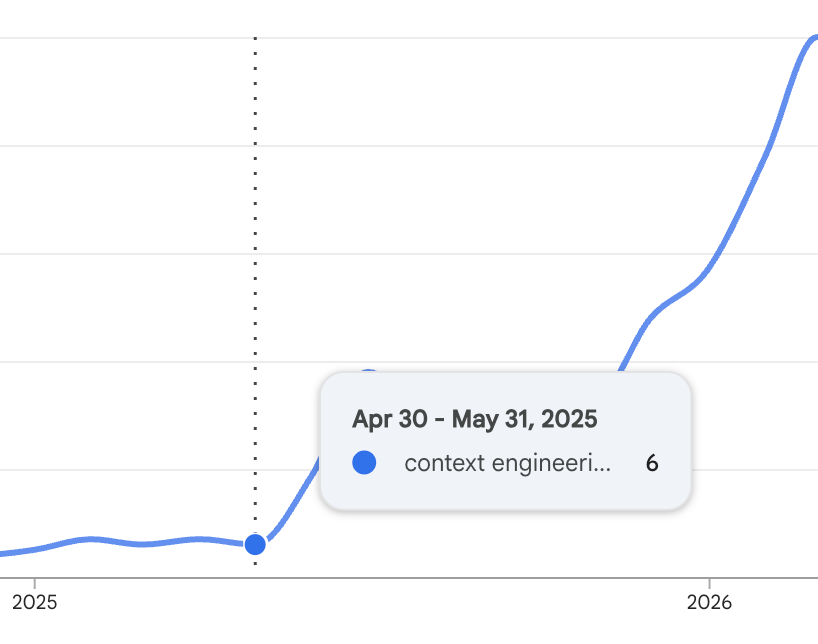
All at once, everyone realized that their AI gave dramatically better answers when provided with enough context.
In 2026, mental models is the opportunity.
With mental models, you can functionally upgrade your AI from Claude Opus 4.7 to Claude Mythos.
To understand how and why, you first need to understand three things:
Why more intelligent AI can be worth $30,000/month
How everyone can make their model signifantly smarter
#1. How More Intelligent AI Can Be Worth $30,000/Month

A few weeks ago, I was speaking at a mastermind of entrepreneurs with 7-8 figure businesses. I asked everyone how much they would pay per month for early access to Claude Mythos, Anthropic’s big new model that’s so powerful they couldn’t release it to the public.
I started the bidding at a few hundred dollars per month, and it went all the way up to $20,000 per month.
That’s how valuable intelligence is.
Here’s another way to think about it. I’ve been happily paying $200/month to access the latest models of Claude and be a heavy user. Theoretically, I could just use open source, local models, and pay less. They’re just six months behind. But I’d rather pay extra to be on the frontier.
Now that you understand how important intelligence is, it’s critical to realize that you, as an individual, can actually increase your AI's intelligence even if you’re not at a big lab….
#2. How Everyone Can Make Their Model Significantly Smarter
At first glance, it would seem that there is no way to make the AI we get from labs smarter. They have huge teams of the world’s smartest people with the biggest budgets all focus on making AI smart.
This is obviously not the case. Here are a few examples of research that shows that fairly simply interventions can have a big impact:
Simply adding the words “let’s think step by step” lifted an older model’s score on a set of math word problems from 17.7% to 78.7%.
Asking the same question several times and keeping the most common answer raised grade-school math accuracy from 56.5% to 74.4%, a jump of almost 18 points.
Letting the model try several paths and back out of the dead ends instead of marching down one line took GPT-4 on the Game of 24 puzzle from 4% to 74%.
Telling it to name the governing principle before solving the specific problem raised accuracy by 7 to 27 points across physics, chemistry, and multi-step reasoning.
Letting the model select and combine its own reasoning moves for a task beat plain step-by-step reasoning by up to 32 points, and beat the sample-and-vote method above while using 10 to 40 times less computation.
Giving it a library of reusable thinking templates to pull from improved results by 11% on one puzzle and 51% on another over the previous best.
Handing it a small kit of named reasoning moves to run on demand lifted a standard model from 32% to 53% on a hard math benchmark, past a specialized reasoning model that costs far more.
Giving a model tools instead of more size let a 6.7-billion-parameter model match models roughly 25 times larger once it could reach for a calculator and a search engine.
Combining several weaker models so their blind spots cancel let a committee of open-source models score 65.1% on a standard benchmark, beating GPT-4o at 57.5%.
Microsoft Research published a method, SkillOpt, that improves an AI by training the instruction document you hand it rather than the model itself. Freeze the model, optimize the words. It was best or tied-best on all 52 of its tests.
More recently, I created a mental model system prompt that makes your AI smarter, and I wrote about it here:

Whenever I talk to readers one-on-one, they point out how much better the mental model-enhanced response is compared to the generic AI response.
To understand why, you need to understand one of the simplest and most powerful mental models that almost no one knows about…
The Universal Intelligence Framework Explains The Power Of Mental Models
There is a simple 4-step formula that EVERY intelligent system in the universe has, whether it’s a human, a rabbit, or AI:
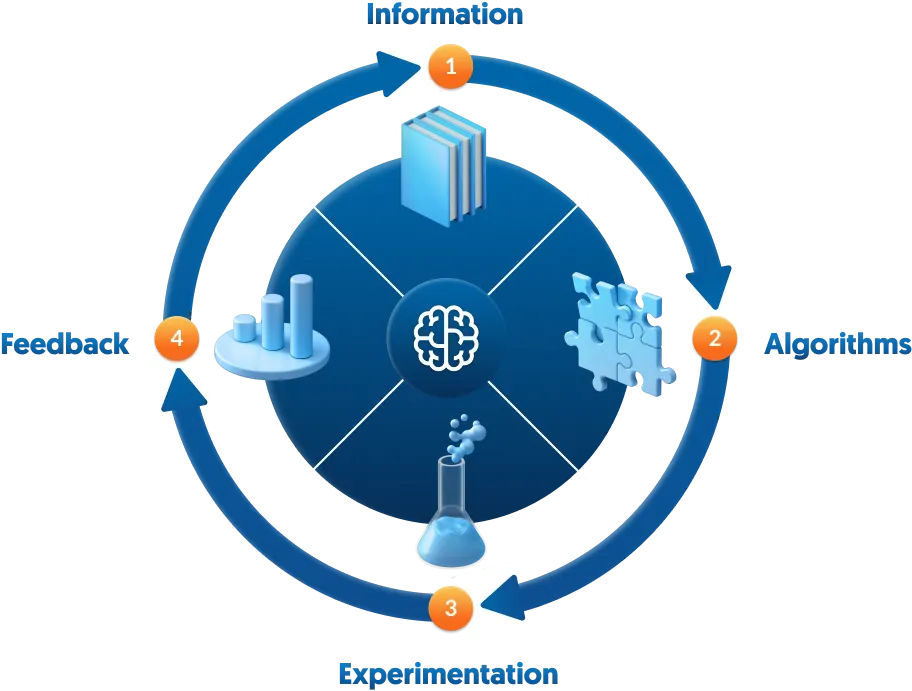
Here’s how it works for humans in a nutshell:
We take in information. We humans take in information from direct experience, from consuming knowledge, and from other people.
We process that information. We use a combination of conscious and unconscious algorithms to make sense of that data, connect it to other knowledge we have, and update our existing understanding of the world. Two people looking at the same data could process it in completely different ways.
We experiment. After making sense of new information, we take action in the world. For example, after we read a book, we might get a few ideas of things we’d like to try. So we turn ideas into action items, experiments, and projects.
We get feedback. As we take action, we receive feedback from our environment or our dashboards. Then, use that feedback to update how we go through the next loop.
Organisms that learn faster can perform each step more quickly and effectively.
This model is so powerful and simple that it served as the bedrock of an Accelerated Learning course I taught for years.
It’s particularly powerful in this moment, because it gives us four ways to make AI smarter…
The #1 Insight The Model Gave Me On How To Make AI Smarter
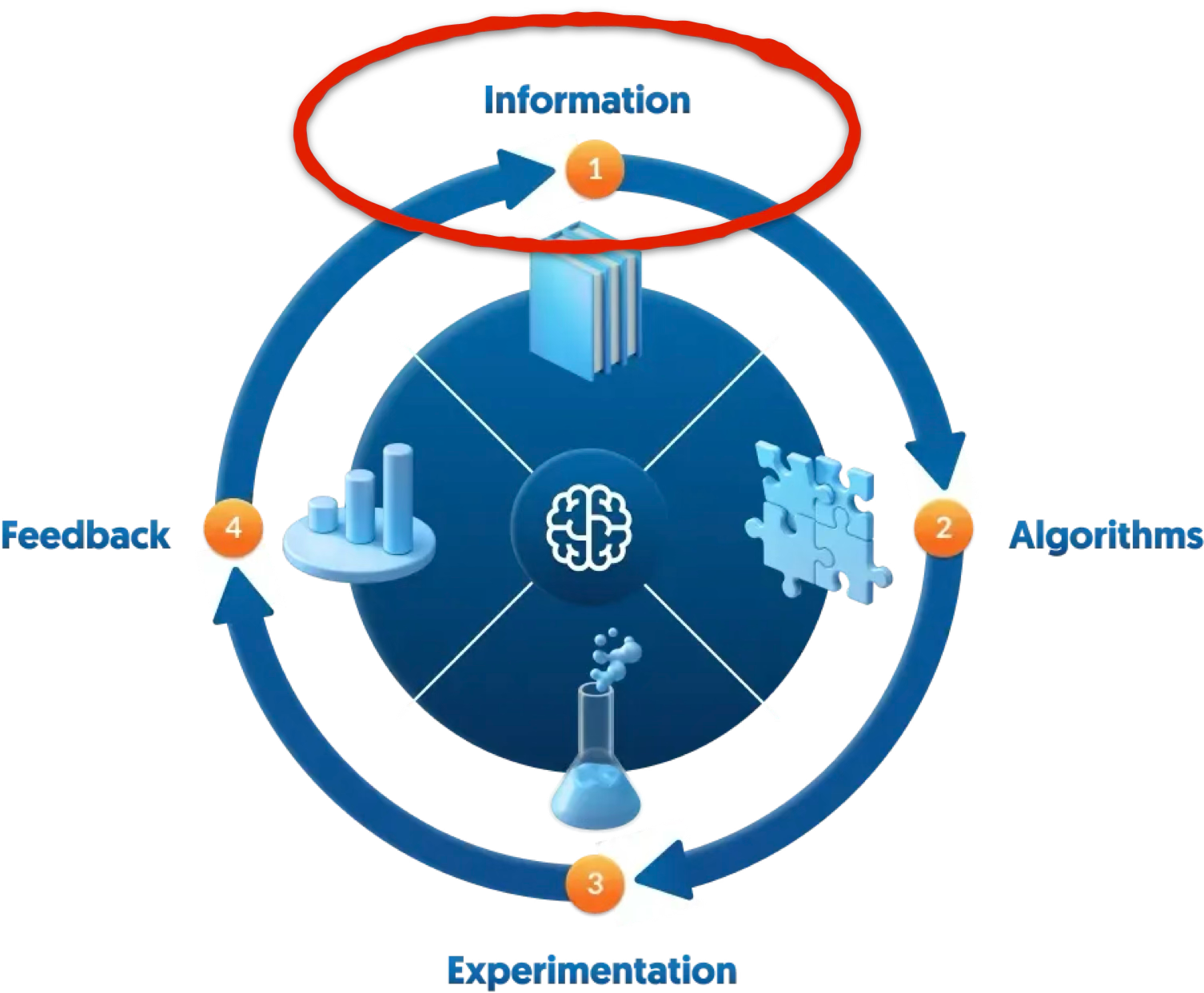
A. Information
Using this model, I was able to contextualize context engineering. Providing the right information to AI is just the first of four steps in the model.
B. Algorithms
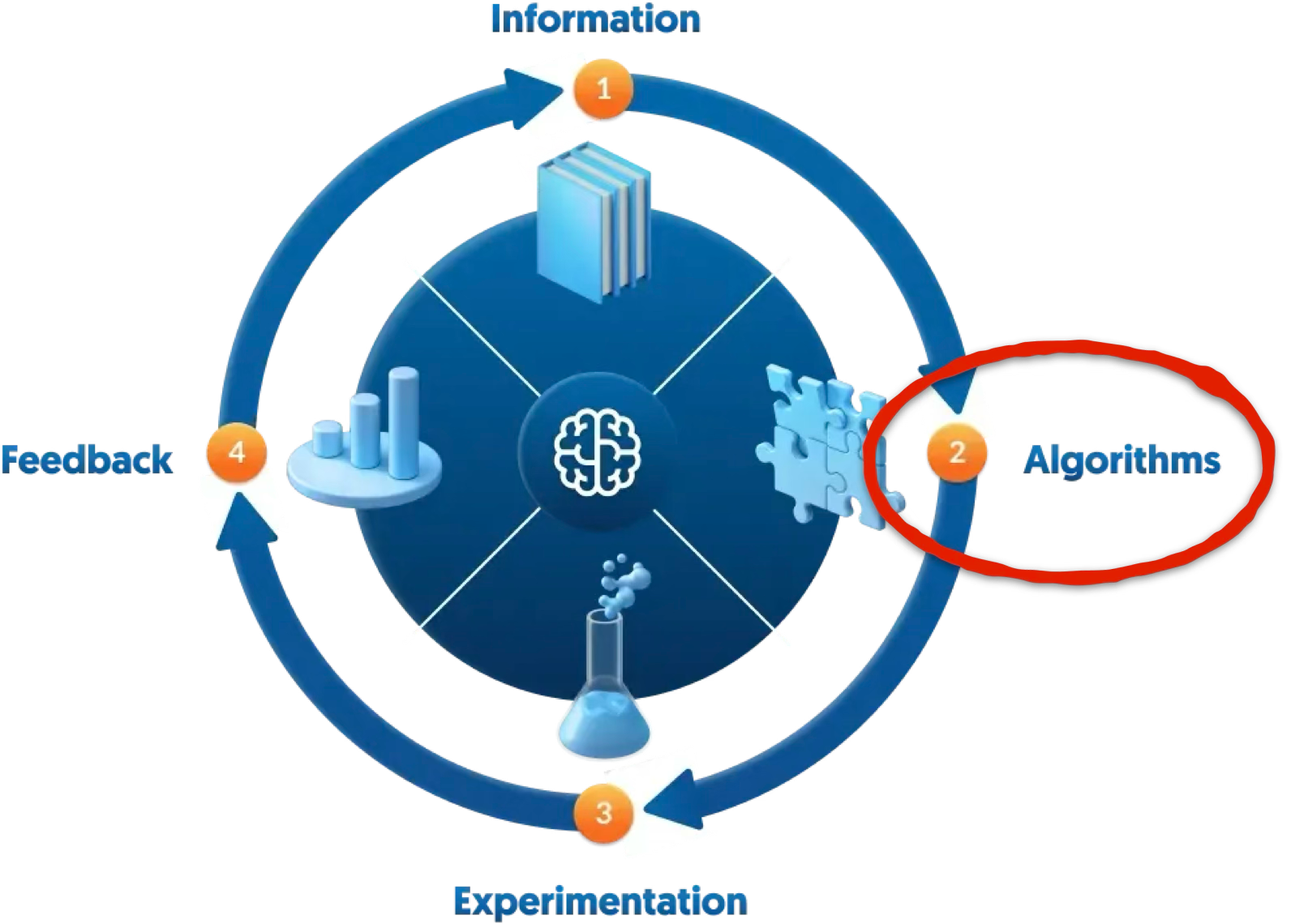
Once AI takes in information, it has to make sense of it:
Categorize it
Prioritize it
Contextualize it
Sequence it
Connect it to other knowledge
Synthesize it
The algorithm stage is how the information gets processed. Two people (or two AIs) handed the same data can reach completely different conclusions depending on the algorithms running underneath.
Mental models are the algorithms. When you tell AI to think through second- and third-order effects, or to reason from first principles, or to apply the Pareto principle, you’re handing it a processing operation it likely wouldn’t have used by default.
C. Experimentation
After processing information, an intelligent system has to act on it and then see what happens. I call this experimentation rather than “action” because the point isn’t just to do something, it’s to test whether the ideas work and learn from the result.
Here’s what’s changing: we used to be limited to one shot. Write one article, ship it, wait for feedback. Now the rate of experimentation can jump by orders of magnitude. Instead of one version, you can have AI generate ten different approaches, take the learnings from each, choose the best, or synthesize a new best. One system I’m building inside Claude Code tests an article’s title and intro against real paid ads—running 30 titles past a lookalike audience to see which hook actually earns clicks before I commit to writing. The constraint was never the number of ideas; it was the cost of testing them. AI collapses that cost.
D. Feedback
The final step closes the loop: you take in what came back and use it to run the next cycle better. This is where evals matter most. The better you can define your goal, how to measure it, and a rubric AI can use to judge “did this work or not,” the more your system can iterate on its own until it reaches something good.
This is also the step where the deepest learning lives. Most people, when AI gives them a flawed output, just say “fix it” and move on—they change the single thing in front of them. But you can use that feedback to make bigger changes: not just what was wrong, but what thinking led to it, and how to update that thinking so the same error never recurs. That’s the difference between correcting an output and improving the system that produces outputs. Andrej Karpathy’s recently released Auto-research points at where this is heading—feedback loops tightening to the point where the system improves itself.
Session Overview
In this session, I:
Go deeper on why mental models are the hidden multiplier inside every high-performing AI system.
Give an overview of mental models
Share Charlie Munger 5-step approach to using mental models
Explain the challenges of using mental models without AI—you have to remember them, pick the right ones, and run them in the right sequence in the moment.
Demonstrate how AI overcomes each challenge
This class is about the architecture underneath AI — and once you see it, you can’t unsee it. The gap between people using AI casually and people who have built mental-model-powered systems is widening fast. This session is about crossing that gap.
I built this class as part of my ongoing Blockbuster Live series, where each session covers one high-leverage idea at the frontier of AI and learning, and gives you something concrete you can apply immediately.
During this session, we:
Explored why mental models are the hidden multiplier in AI productivity
Traced the full prompt progression, from chat to skills to autonomous systems
Walked through the three core ways to embed mental models into AI workflows
Saw how mental models function as a “command language” for better thinking
Examined Gary Tan’s GStack system, built on dozens of embedded mental models
Live-demoed a system prompt that automatically applies mental models to every query
Shared the G-Brain mental model encyclopedia and how to integrate it into Claude
Discussed the learning loop — how AI improves not just output, but your own thinking
Heard a live case study from a participant using fully autonomous AI systems
Answered participant questions on debugging AI errors, system design, and skill-building
AI-Generated Podcast Summary Of The Class
How To Access The Full Course
Free members get a 30-minute video preview of the class.
Basic paid members get:
Access to a monthly 90-minute class for 12 months.
Prompt to create specialized profiles for any context
Class resources (chat transcript, slides, full class transcript, prompts that are shared)
Said differently, paid members get access to 18 hours of learning for just $20/month or $149/year. This comes to just $8 for every hour of live class. And this doesn’t even include our other live monthly class, Augmented Awakening, or over $2,500 in other perks (20+ prompts, 7 courses, 3 books, blockbuster article library, etc).
RECORDING RESOURCES
Presentation Slides
Blockbuster Live Prompts
Class Transcript
Other Classes In The Blockbuster Live Course
Resources Shared
AI Timestamps
AI Chapter Summaries
Chat Transcript


