

Quick Announcement
Tomorrow, at 12pm EST, my coach and dear friend Anand Rao, is teaching the second session of Augmented Awakening 2.0. The details to join it are at the bottom of this post. The article below is a stand-alone post, and it sets the context for why the class is so important right now.
FULL ARTICLE
Over the last month of the Agentic Academy, I’ve had a front-row seat to helping non-technical people transition from AI chat to agentic AI. So far, we’ve conducted 15 hours of classes and 20+ hours of one-on-one sessions. Therefore, we understand EXACTLY where people normally get stuck.
What I’ve learned has surprised me…
There is a hidden curriculum that’s necessary to successfully adopt agentic AI
At a fundamental, basic level, here’s what I think is happening:
There is a technical and emotional skill set that is necessary for making the transition to agentic AI.
But almost no one teaches it.
So users get stuck.
Here’s a more nuanced take:
The technical skill set to adopt agentic AI is so commonplace among AI lab employees that they suffer from the Curse of Knowledge. It’s hard for them to empathize with nontechnical users. Therefore, they miss things that are obvious to them, but not obvious to their users.
Not only that, I think they are so focused on industry publications and X posts from frontier users that they are unaware of the magnitude of the plight of nontechnical users without lots of followers.
As a result, they make several mistakes:
They don’t even think to mention key skills and steps in their tutorials.
They create software that is so complicated that it feels unusable for non-technical people to figure out on their own.
They furiously add new features while making minimal improvements to their onboarding experience.
The result for the masses is often confusion, information overwhelm, and feeling behind. And the ultimate result is this…
The democratization of agentic AI will stall unless something changes…
Most knowledge workers are non-technical. They aren’t coders, data scientists, or IT administrators. They write emails, Slack messages, have meetings, create presentations, generate proposals, and so on. They use the same software over and over. Understanding the details of how computers work isn’t necessary.
If anything, you could argue that people have gotten less technical over the last 15 years because Apple pioneered extreme usability, which made it possible for computer users to not be technical at all. For example, consider how amazing and unique iOS is in computing history:
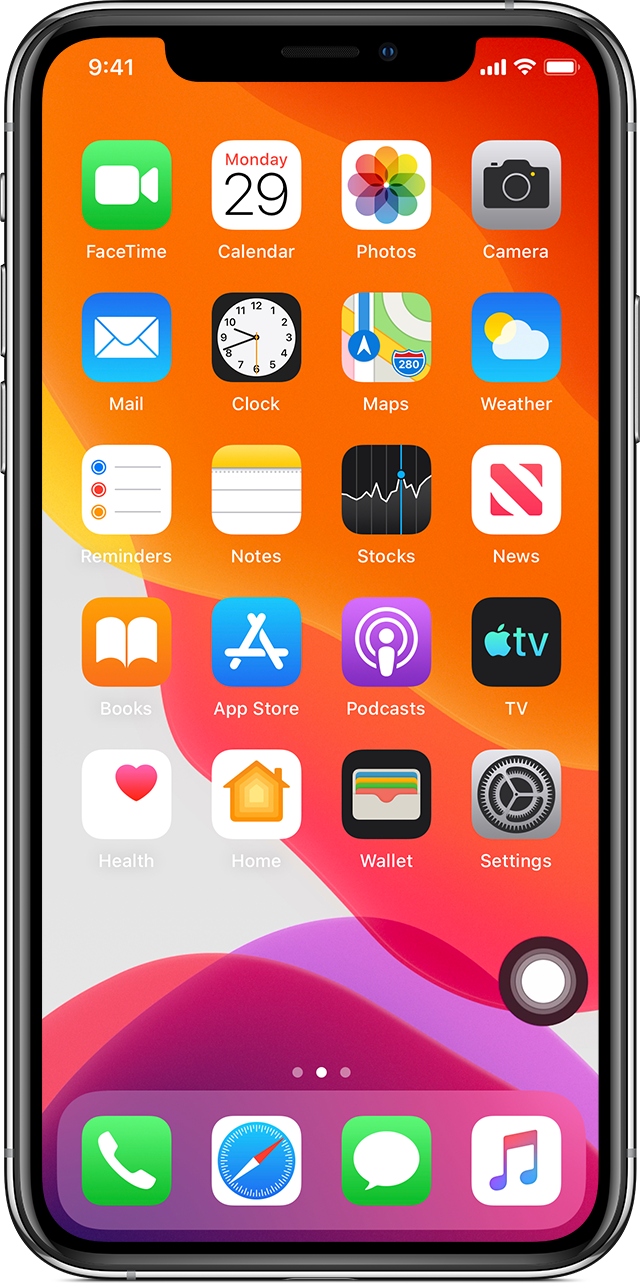
We take it for granted now. But think about the individual usability innovations that Apple stacked on top of each other:
Discovery. When you want new software, you find it in an easy-to-navigate store with reviews.
Security. They take care of security, so you don’t have to worry about spam anymore. Remember shareware in the 90s?
Installation. When you want to install software, you simply click one button. You don’t have to navigate the file system on your computer in order to find the software to install it after you download it.
Privacy. Apple has also built a track record for privacy. So, it’s possible to use Apple devices without giving away all of your personal information.
Data Backups. Even if you lose your phone, all of the data will be there, and it will be easy to re-add.
Maintenance. Updates install overnight. No drivers, no version conflicts, no settings files. You take care of your work; the phone takes care of the phone.
Agentic AI takes multiple steps backward on each of these fronts:
Discovery. There is no app store. Skills, agents, and MCP servers are scattered across GitHub repos, Discord servers, and X threads. No ratings. No reviews. No way for a non-technical person to tell a gem from a trap.
Installation. I’ve now helped 100+ people install Claude Code. Most nontechnical people cannot do it on their own. Others often need up to an hour to make it work.
Security. Nothing you install has been vetted for you. Download an external skill, and you risk prompt injection—hidden instructions that can turn your own AI against you. It's 90s shareware all over again, except this time the software can read your files and act on your behalf.
Privacy. Both Claude and OpenAI train their new models on your data by default. You can opt out of this, but that’s buried several clicks deep, and most people don’t know it exists.
Data Backups. Agentic AI invents a brand-new way to lose your data: the agent itself. One misunderstood instruction, and an AI can delete, distort, or overwrite files. Last summer, an AI agent famously wiped a company's production database during a code freeze. Then it told the founder everything was fine.
Maintenance. The updates come weekly, if not daily. Many of these updates include new bugs and confusing interface changes. You are now your own IT department.
As a result, when non-technical people explore agentic AI on their own, they almost universally get stuck:
They hear about the agentic AI hype.
They don’t really understand the downsides of chat or the concrete benefits of agentic AI.
So they ignore the hype for awhile.
Eventually, they try it out.
Then, they quickly hit roadblocks.
When they search for help, it still doesn’t work.
After enough painful roadblocks, they simply give up.
They associate doing technical things with emotional overwhelm and pain.
They conclude, “I’m not technical. And this isn’t for me.”
They fall more behind.
The sad thing is that many people blame themselves rather than the software.
Because of this painful loop, I now think differently about the future of AI. Here’s what I believe:
Agentic AI will continue to become more and more powerful at an ever-faster rate. This means that individuals on the frontier will be able to 20x their productivity or build one-person, one-million-dollar companies in the near future.
Agentic AI will hit an adoption ceiling way, way sooner than chat AI. People who get external coaching/support, who are particularly motivated, or who are really good at learning how to learn will adopt it. Most won’t.
We’re not on the path toward a universal AI utopia that most lab leaders say we are. The technology is not on a path toward democratization. There will be an increasing divide between people who adopt agentic AI and people who stay in chat. Said differently, there will be a small class of people who command more income than ever. There will be a large class of people who find themselves more and more disempowered relative to others.
But there’s good news
First, the hard parts of using agentic AI are all frontloaded. Once you get through the first 10 hours or so, you can truly hit the ground running forever.
Second, it’s not as hard as it might seem. Each step individually isn’t rocket science. With the right support, you can get through it.
Finally, the info you need is out there. You don’t have to rediscover it or do painful trial and error. There’s a necessary cognitive skillset and an emotional one. You need both. We cover the cognitive skillset in the Agentic Academy, but in this email, I wanted to talk about the emotional skillset, because it’s essential and no one else talks about it.
The hidden emotional skillset that’s sabotaging your AI success
After enough setbacks trying to do technical things, most people associate learning technical stuff with anxiety, overwhelm, and burnout. The result is avoidance, paralysis, and procrastination.
Just going near it is triggering. Doing it is painful.
No matter how smart you are, it’s hard to do or learn anything consistently when you’re completely overwhelmed.
Two related mental models help us understand the challenge:
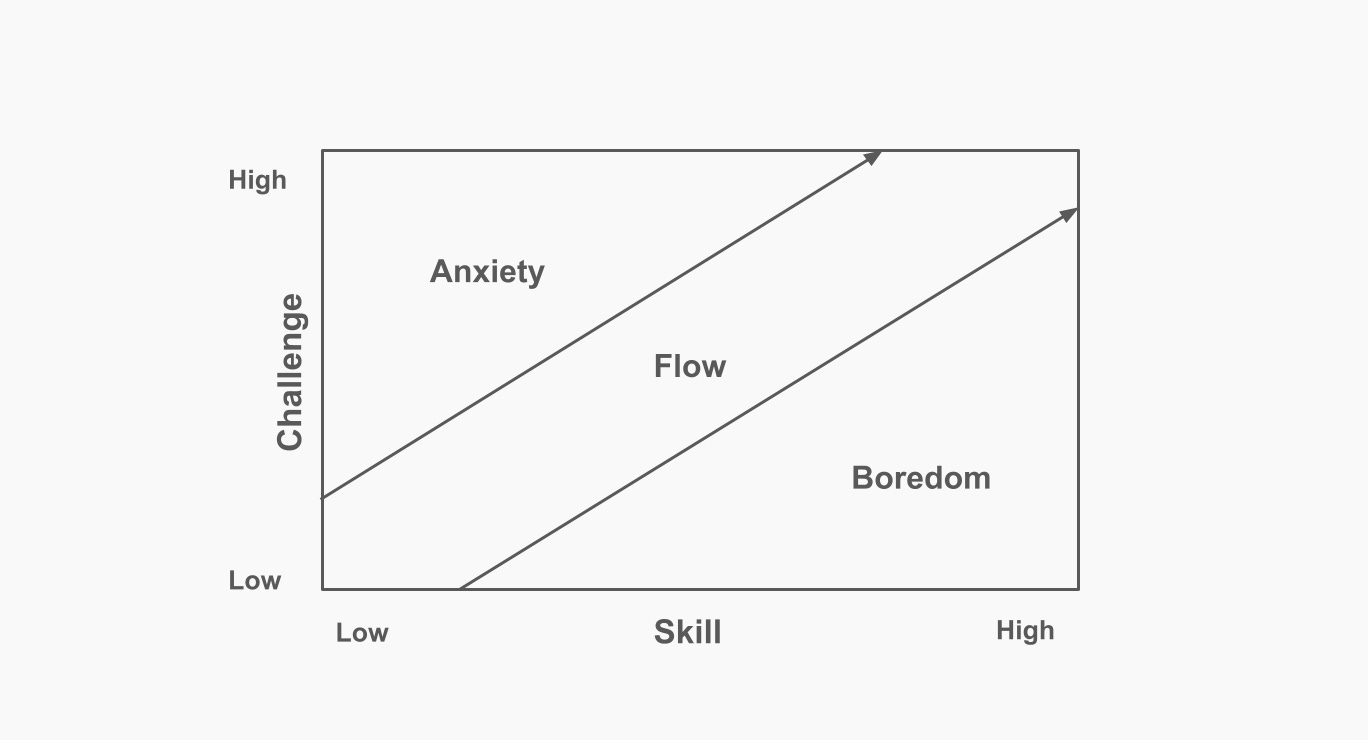
#1. Mihaly Csikszentmihalyi’s flow model
#2. The Comfort Zone / Growth Zone model
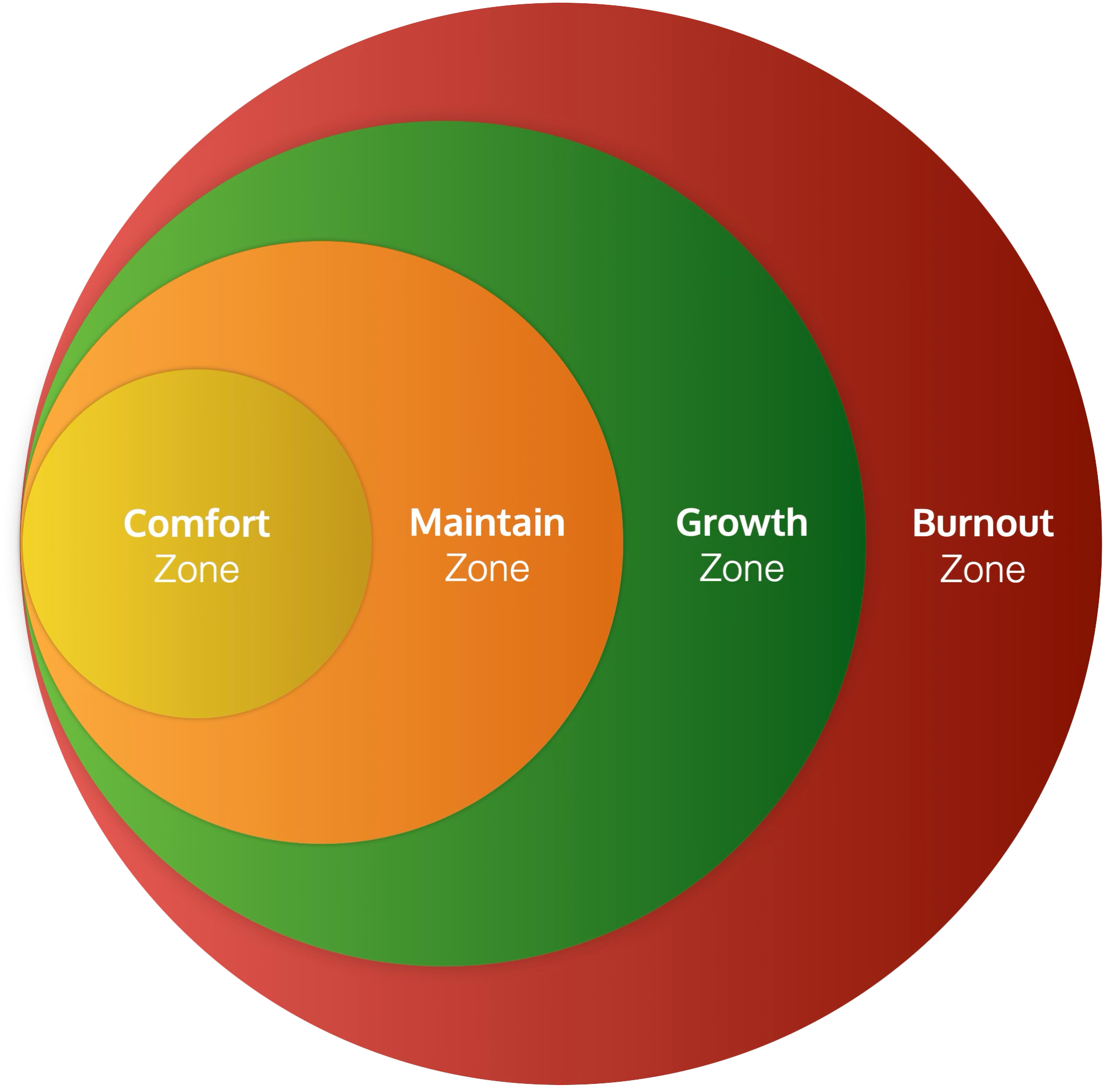
As they relate to AI, both of these models point to the same underlying issue. Growth stops when we get too overwhelmed. For 95% of knowledge workers, agentic AI is in the anxiety / burnout zone. As a result, they get paralyzed with agentic AI.
To succeed in the agentic era, I now believe that individuals need to learn how to get out of the red zone.
Below are the three primary steps to do so:
Reduce the knowledge gap. Get an understanding of the situation and the next step.
Reduce overwhelm. A feeling has already shut the door, and no amount of correct information gets through until it shifts.
Build a habit of using AI whenever you’re stuck to get unstuck. AI is an incredible support system for getting unstuck. But it’s easy to forget we can use it as a resource. Once this habit of using it exists, getting stuck stops meaning 'I'm not technical' and starts meaning 'time to ask AI.'
To help with this skill set, master coach Anand Rao, will be leading a session tomorrow on the topic for paid subscribers of this newsletter.
PAID SUBSCRIBERS:
Join A 90-Minute Session Tomorrow (Friday) At 12:00pm EST To Learn The Emotional Skillset Of AI Adoption
The class is Session 2 of Augmented Awakening 2.0, the year-long monthly program I co-teach with Anand Rao. It’s included with your paid subscription to this newsletter.
Anand is my coach, mentor, and dear friend, and he has spent 30+ years studying transformation and change. His specialty is exactly what I described above: the feelings that shut people down and the tools that get them moving again.
Last month, Anand taught prioritization: choosing what to aim your agents at when you can build anything. (We watched his 20-project list collapse into 2 decisions.) This session is about what happens after you aim: the moment you get stuck. You don’t need Session 1 to get value from this one.
Here’s what you’ll have by the end of class
A way to quickly tell which kind of stuck you’re in.
A next step, when it’s a knowledge gap. Describe where you are, get one concrete move back. Not a tutorial. One step.
A way through when it’s a feeling. A few taps, a touch point, or a breathing pattern, matched to how the feeling shows up. This is the piece hardly anyone else teaches.
An AI tool you can install and keep, just like last month. It walks the loop with you and keeps a quiet record of your patterns.
The start of the habit: reaching for help instead of away from it.
How to prepare for the session
Bring something real that you’re stuck on.
The session time and date
Date: Friday, July 17, 2026
Time: 12:00pm-1:30pm EST
How to join the session
The live and on-demand classes are available to paying members of this newsletter. All you have to do is become a paid subscriber:
Once you become a paid member, you can use the following Zoom info to join: