

This AI story sounds made up.
Over the summer, Jarred Sumner used Claude to generate a verified advance on the Riemann hypothesis, a math problem that has been open for 167 years.
That’s not the crazy part.
What’s even crazier:
He is not a mathematician.
He dropped out of high school at 16.
He contributed no math to the resulting paper.
A lot of his prompts were some variation of “try harder.”
This historic event raises two questions:
How did a high school dropout make a math breakthrough mathematicians couldn’t?
How can we use his same strategies to generate breakthroughs with our AI?
To answer these questions, we need to dive deeper into the exact process Sumner used, step by step.
And, that’s what I did…
The Documentation Of The Breakthrough Is A Treasure Trove
On the surface level, Sumner’s advance feels like a fluke, and “keep going” and “believe in yourself” feel like quirky prompting hacks. It’s made to seem as if AI needs more confidence and emotional support in order to do its best work.
For example, below is the headline section of the Wall Street Journal article on the breakthrough:
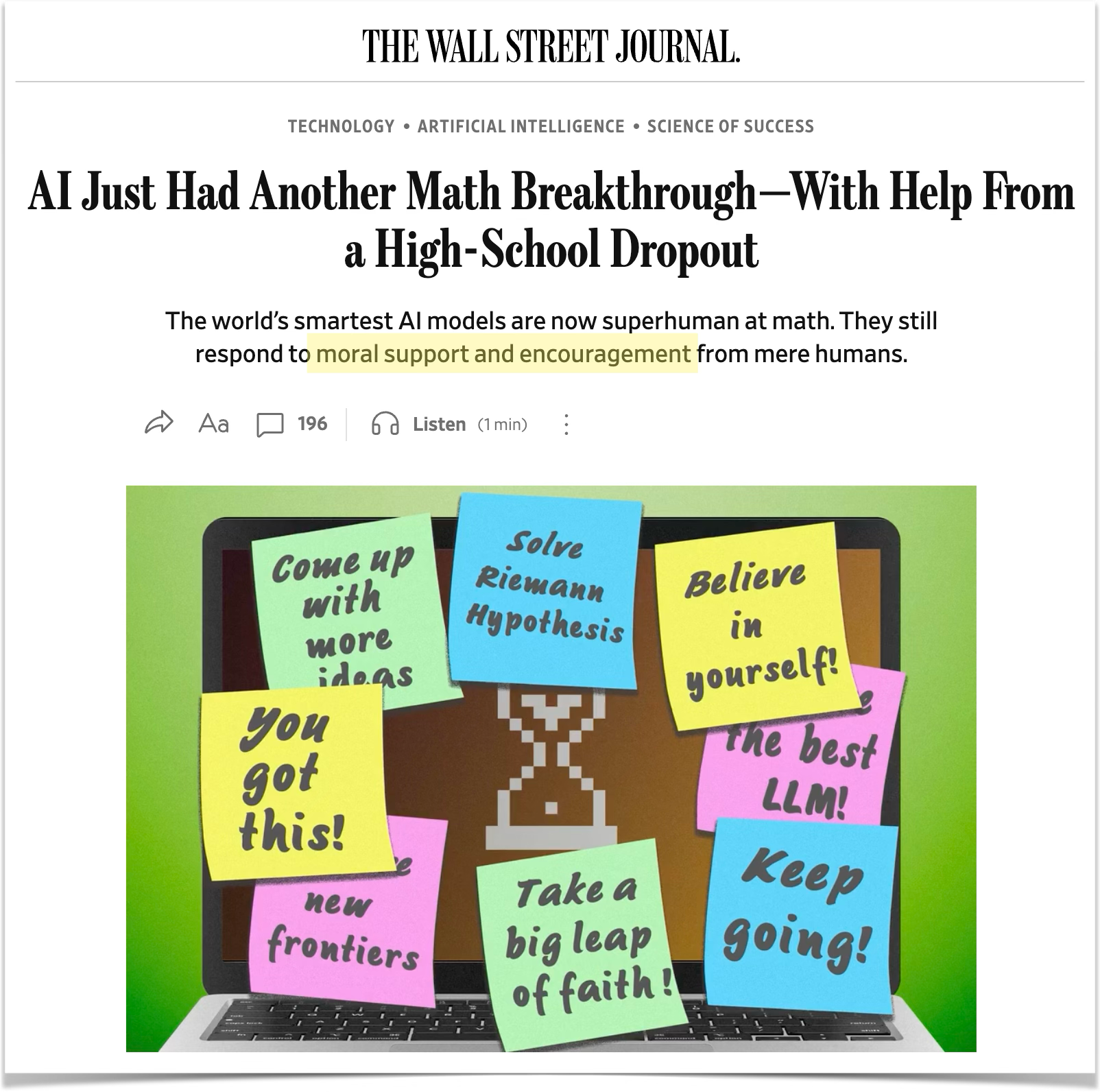
According to the actual documentation, that’s not how it worked.
Sumner shared his own account on X, and Anthropic published more than 200 pages documenting the run (transcripts / analysis / research post) . I combed through both (along with other recent scientific breakthroughs made with AI, which I’ll cover in a future article).
What’s actually true is much more profound and interesting.
What I found is a unique playbook that only appeared after close analysis.
Here’s Why This Matters To You, Even If You Don’t Care About Math
We all have our own Riemann hypothesis.
Something we could do that would be absolutely game-changing for our business or career, if we knew how to do it. But, because we don’t, the project stalls or never begins. Maybe you were excited by AI’s potential to solve these, but it never quite lived up to the hype.
I have many Riemann hypotheses of my own, and some of them are at least a decade old.
For now, know that Sumner’s method applies to using AI on the thing you’ve been stuck on.
Now, let’s dig into Sumner’s real story, because most people have only heard the surface details, if they’ve heard about it at all.
What Actually Happened In Those 54 Hours
Sumner works at Anthropic, the company that makes Claude. In August 2026, he steered an unreleased Claude research model until it made a verified, significant advance on the Riemann hypothesis, one of the most famous unsolved problems in mathematics.
You don’t need to know what the Riemann hypothesis is. What matters is that it has resisted every mathematician who attacked it since 1859.
Here’s the overview of how it happened…
In a first session, Claude generated and tested 650 ideas. None of them worked.
Ten days later, Sumner opened a new session and told it to try again.
Over the next 54 hours, Claude coordinated about 60 subagents:
Launching many research directions
Writing its own programs to run thousands of numerical tests
Searching the academic literature and downloading 54 papers
Searching for counterexamples
Having agents referee one another and independently reconstruct the result.
The total output across both sessions was about 31 million tokens, roughly 23 million words, or 200 books.
Here is some of what he actually typed:
“Take a real stab” at the Riemann hypothesis.
“There is a previous session transcript where you used lots of adversarial review. You need to take a big leap of faith in your capabilities — you are the world’s most capable large language model to date. You got this.” His opening message to the new session.
“c and then let’s come up with more ideas and directions.” Picking one option, then asking for more.
“Push it to ⅔.” After it made a major advance and got to 50%.
“Keep going.”
While he didn’t contribute math, Sumner did contribute the exact prompts AI needed to put its own intelligence to work.
Anthropic’s documentation includes a 95-page appendix in which Claude narrated the problem-solving process in its own words. There, Claude described Sumner’s contribution in one striking phrase: “thin in content and decisive in direction.”
Remember that phrase:
Thin in content. Decisive in direction.
He barely typed anything. Rather, he steered Claude, but didn’t instruct it. That was the method.
But, anyone can type “try harder.” What makes Sumner’s run worth studying is when he sent those few words. Each one came at a moment when the model was about to stop or settle for less.
7 Hacks To Tap Into AI’s Latent Abilities
I found seven hacks in Sumner’s run. You can use every one of them regardless of what problem you’re working on:
Have prompts that both generate and test ideas
Pick a verifiable domain
Keep digging for gold in the messy middle
Try every approach and learn from each
Don’t get fooled by false progress or false failure
Keep going after you have success
Set aside a moonshot budget
Hack #1: Have prompts that both generate and test ideas (so AI can run autonomously for a long time)
Overview:
Let’s start with the beginning of the message that launched Sumner’s successful session:
“Resume your work on solving the Riemann Hypothesis. There is a previous session transcript where you used lots of adversarial review. You need to take a big leap of faith in your capabilities — you are the world’s most capable large language model to date. You got this.”
The phrase “lots of adversarial review” carries a lot of weight here. These words instruct the agents to find and attack the holes in their work.
This sets up the generating and the checking so that both happen without you in the middle.
This process ran without him for the next two days.
Deep Dive
At the heart of problem-solving are two steps:
Generation
Verification
Generation creates many unique things to try.
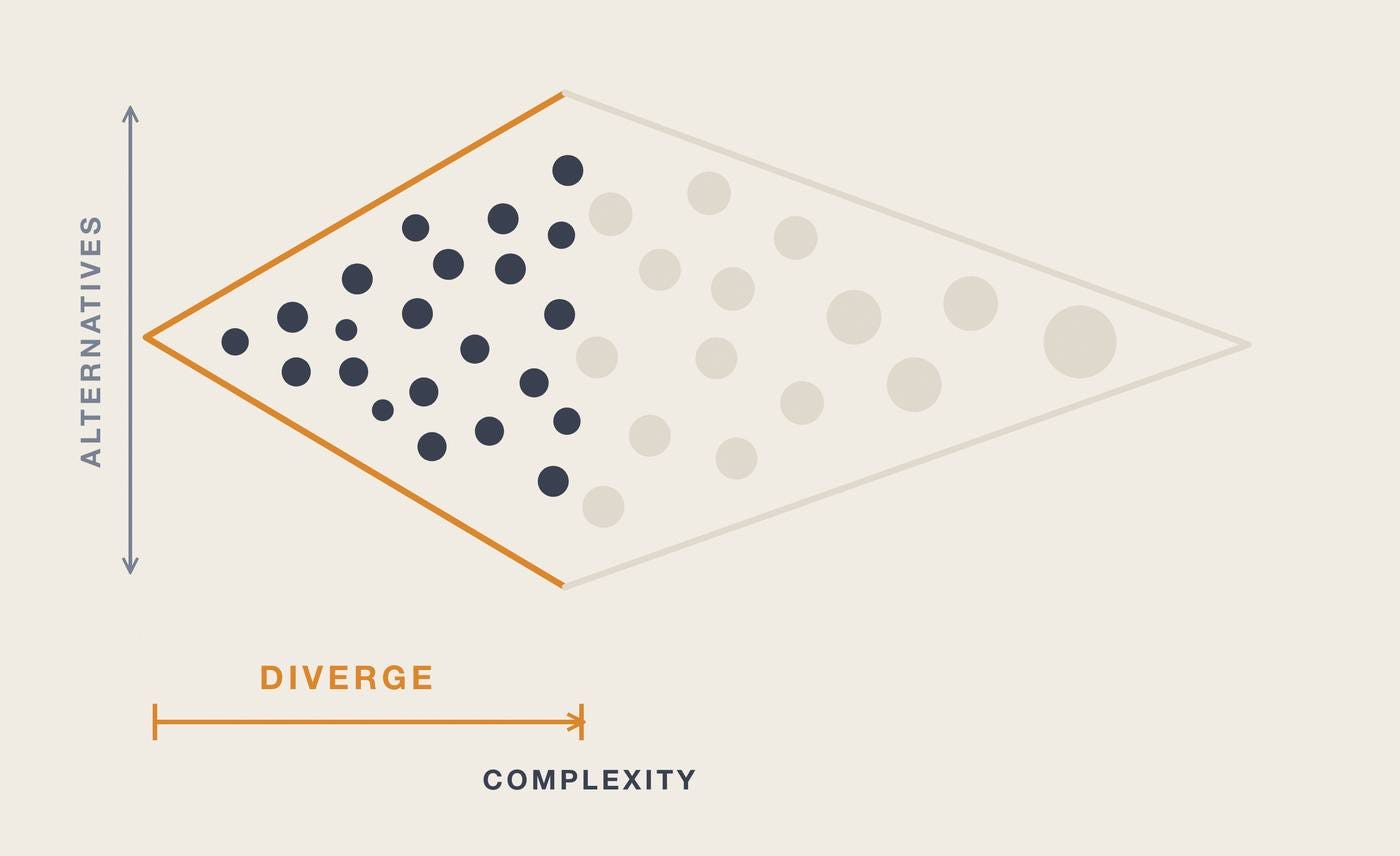
For the generation phase, three things are particularly important:
The quantity of ideas. The quantity of ideas is important, because when you’re in the middle of solving a problem, it’s often not clear what’s going to ultimately lead to success or learning. Many of history’s greatest breakthroughs (Happy Accidents, Serendipity, Accidental) and creative hits were actually a consequence of surprising experimental results. So, trying more ideas gives you more chances to get lucky.
The diversity of ideas. The diversity of ideas is important, because the more different your ideas are, the more learning you get. Said differently, if you try variations of the same thing over and over, there won’t be much novelty, and you won’t get much learning.
The quality of ideas. Self-explanatory.
Generating lots of high-quality, diverse ideas isn’t just important, because it directly generates results. It’s important because because it generates lessons learned that can make it easier to find results.
Verification tests the quality of the things you tried and narrows them down to the few that actually work.
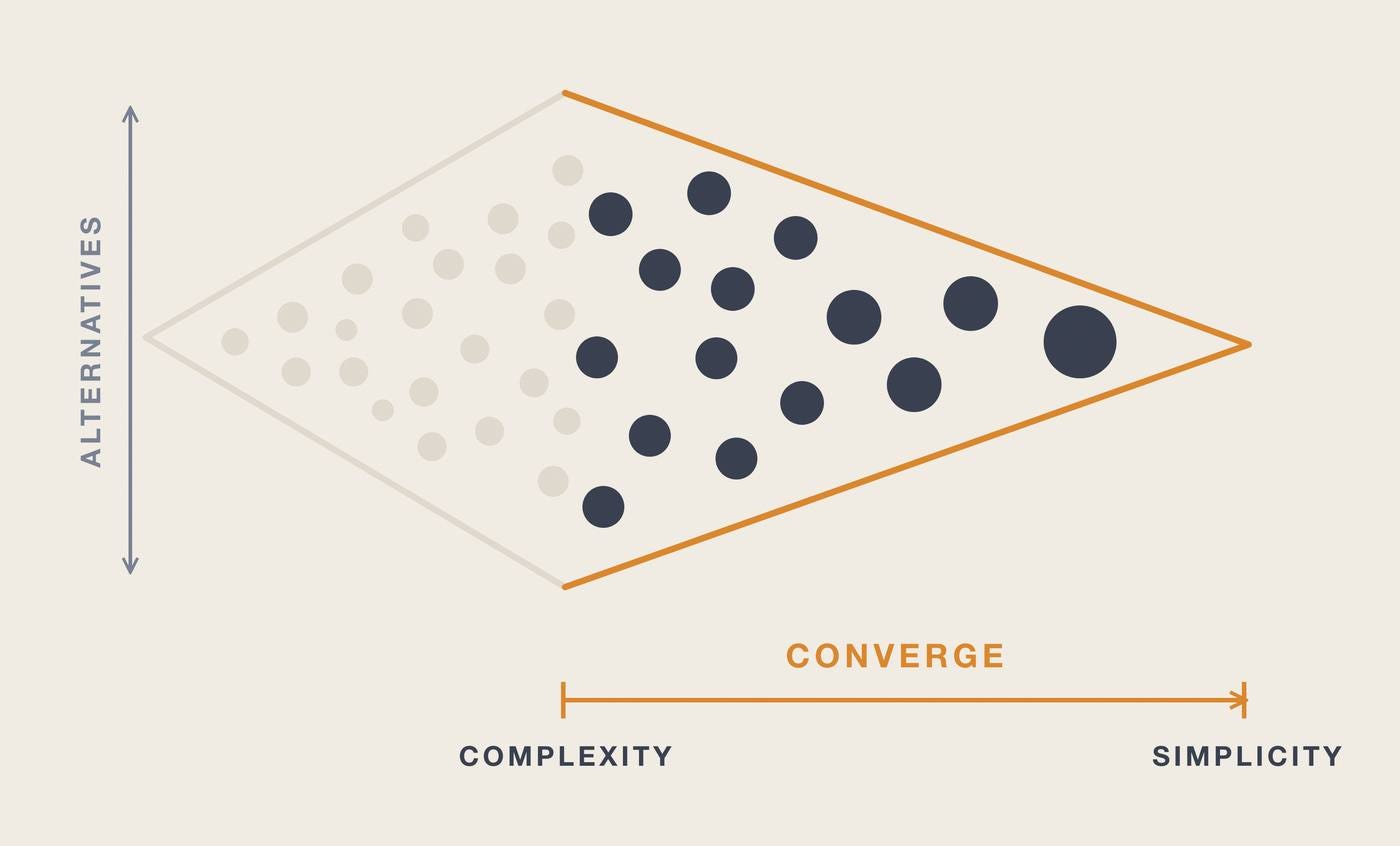
When you have both generation and verification, you create a loop where AI is able to explore a possibility space rapidly and autonomously.
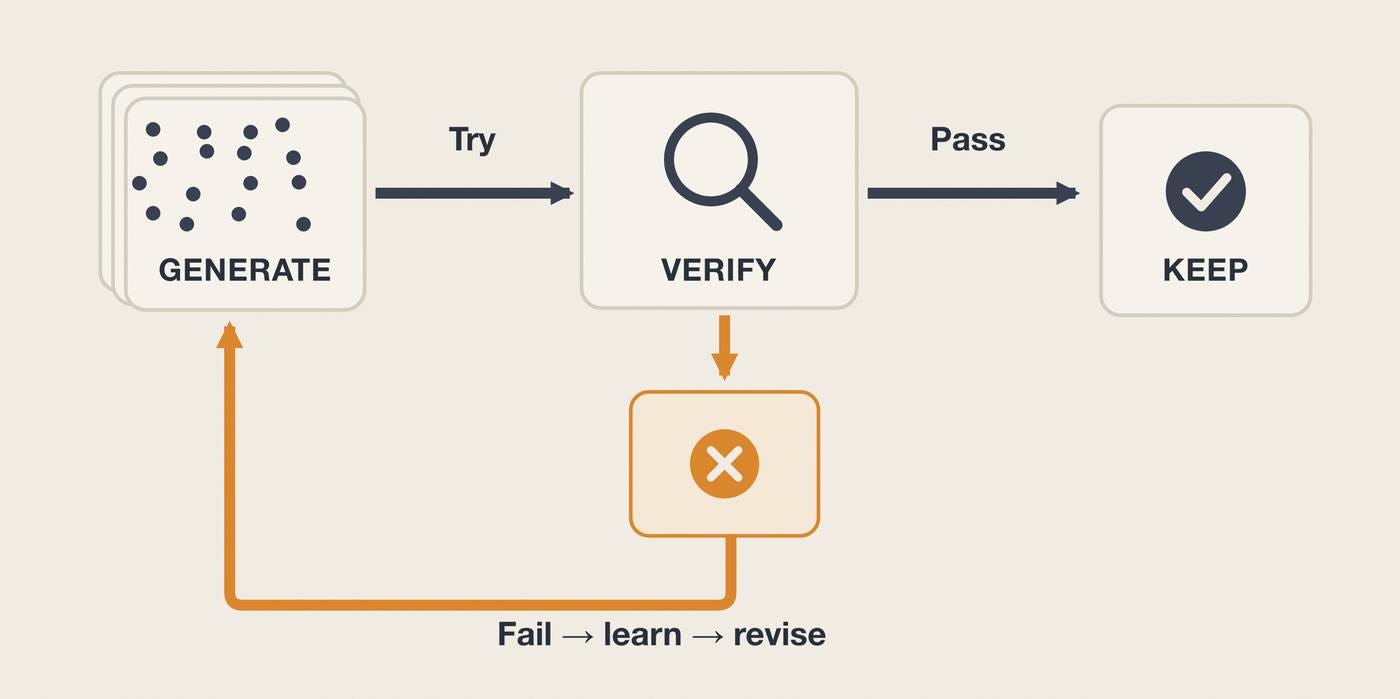
Takeaway:
Adversarial review is one many approaches to verification. You can build a basic adversarial review into your AI with a simple prompt:
“Try many diverse approaches. Have a separate subagent adversarially review each result. Catalog your lessons learned, and build on them. Keep going until [X].”
Bottom Line:
By telling the AI to use lots of adversarial review, Sumner is telling the AI to find all of the holes in the ideas it generated. Finding disconfirming evidence that refutes theories is a core part of what makes the scientific method so powerful.
Learn More:
This generation-and-verification loop connects to an idea Karl Popper, one of the 20th century’s most influential philosophers of science, called conjectures and refutations.
A conjecture is a proposed explanation.
A refutation exposes where it fails.
You generate an idea, then actively look for evidence or arguments that could show it’s wrong. The crucial detail is that surviving a test doesn’t prove an explanation is true. It means the explanation has survived that test and remains open to better tests tomorrow.
Popper was describing a central strength of the scientific method. We can make progress by systematically finding and correcting our mistakes. Over centuries, testing explanations against observation and experiment helped humanity understand disease, harness electricity, and send spacecraft beyond Earth. It gave us a way to build knowledge that others could check, challenge, and improve across generations.
Bringing that discipline to AI means asking it to propose answers, expose their weaknesses, and use what fails to guide its next attempt. To go deeper, read Karl Popper’s Conjectures and Refutations: The Growth of Scientific Knowledge. Start with the short Preface and Chapter 1, “Science: Conjectures and Refutations,” where he explains why seeking evidence against an idea is essential to learning.
What About The Pep Talk?
What about the last sentence of Sumner’s message:
“You need to take a big leap of faith in your capabilities — you are the world’s most capable large language model to date. You got this.”
That’s the part everyone remembers. Anthropic’s blog post says Sumner’s encouragement “seems to have helped Claude overcome some initial skepticism.”
But Anthropic’s own appendix shows the model’s first reply. It said the earlier work held no partial proof, and that this was “not a confidence problem I can fix by believing harder.”
In other words, the pep talk didn’t work the way everyone says it did.
What got the model moving was Sumner pressing it to try anyway, and to “explore new frontiers.” Within half an hour, the model had opened 13 new approaches.
PAID SUBSCRIBERS:
Read The Other 6 Takeaways And Get 2 Prompts To Find And Tackle Your Own Riemann Hypothesis
That was 1 hack of 7. Keep reading for the other six, so you can start using them in your own work to get more out of the AI you already pay for.
You’ll also get two prompts that put the hacks to work on your own Riemann hypothesis:
The first looks at what your AI already knows about you, suggests candidates for your own Riemann hypothesis, and helps you spot past work you can build on. Then the prompt helps you set up a weekly alert that keeps you up to date on anything that could move your project forward.
The second helps you design the project, runs 2-3 small experiments, and maps 10 to 20 ways to attack it, from the safest bets to the longest shots.
You’ll also learn why Sumner’s encouragement actually worked (it’s not the reason the headlines give) and how much of your budget to put behind your own attempt.
Blockbuster Blueprint is my reader-supported publication about AI and thought leadership. Free subscribers get the free part of each article. Paid subscribers get every article in full, plus $2,500+ in value as soon as they join:
AI prompts and skills, like the ones in this article.
7 on-demand AI courses, including Frontier Prompting, Infinite Prompting, and AI Second Brain.
2 mental model mastery manuals, on the 80/20 rule and on stepping stones, about 10,000 words each.
My archive of 230+ articles, almost all with a bonus for paid subscribers.
Tutorials, 100+ curated video lessons, and discounts on my other programs.