

What You Get Today
Free Subscribers
For years, I’ve had video envy. I wanted to make videos, but I chose to specialize in text instead, because creating high-quality videos meant spending hundreds of hours and thousands of dollars to get the result I wanted.
Since a new AI model was released on September 22 with improved video creation ability, I’ve made dozens of videos, and I’m completely blown away. This article is about what this new ability means for anyone with knowledge worth sharing, and how you can use it too. In short, AI video can improve your teach, bring you new revenue, and bring you traffic.
The article includes:
The three challenges that keep most of what we know stuck in our heads.
The September 22 AI update that lets anyone create videos that would normally cost thousands of dollars.
A sampling of the videos I’ve made, and the prompt behind one of them.
6 ways video can take you to the next level as a thought leader and entrepreneur.
20 ideas for videos you can make with AI.
Details on the Friday, October 23 video-creation bootcamp this week, where Wyndo and I will help you make your first video (and we’ll give you a tool that makes it even easier).
Paid Subscribers
For AI video creation to work best, you need to use it in combination with skills. I researched and tested the best AI video skills. These are the top three that I would recommend:
A skill that takes you from a rough idea to a polished, finished video.
A skill that creates detailed, interactive illustrations of real-world machines and complex systems.
A video-editing kit that turns raw recordings into polished videos, reels, and YouTube Shorts (it’s what I use for creating videos from my raw riffs).
Copy-and-paste prompts that have Claude install all three for you, or just the ones you want.
In addition to these skills, you get $2,000+ in other paid perks (books, skills, classes, mental model manuals).
FULL ARTICLE
Right now, there’s a paragraph, book, or idea you haven’t discovered yet that could change your life forever. We’ve all had these breakthrough experiences where a phrase that a parent, mentor, or teacher said stuck with us and changed everything. Or a “quake” book that shook us to our core.
Quake books are rare, but one is worth a thousand merely good books. A breakthrough knowledge experience might only last a few minutes, but its effect can last a lifetime. It is the ultimate form of learning leverage.
Now, invert things.
Think about all the “breakthrough knowledge” sitting between your two ears doing nothing. Wisdom that you built up, tested, improved, and integrated over decades of painful trial and error and life experience, but never shared:
Wisdom that would have changed the life of a younger version of yourself.
Wisdom that could change the lives of thousands or maybe even millions of people.
Now, here’s a deep question for you…
What percentage of your knowledge that could help others have you shared publicly?
I recently asked this question in a class, and the unanimous answer was roughly 2%.
When you think about it, that is a profound waste, not just for yourself but for society. Cumulatively, hundreds of trillions of years’ worth of breakthrough knowledge is resting in people’s heads, and much of it never even makes it onto the Internet.
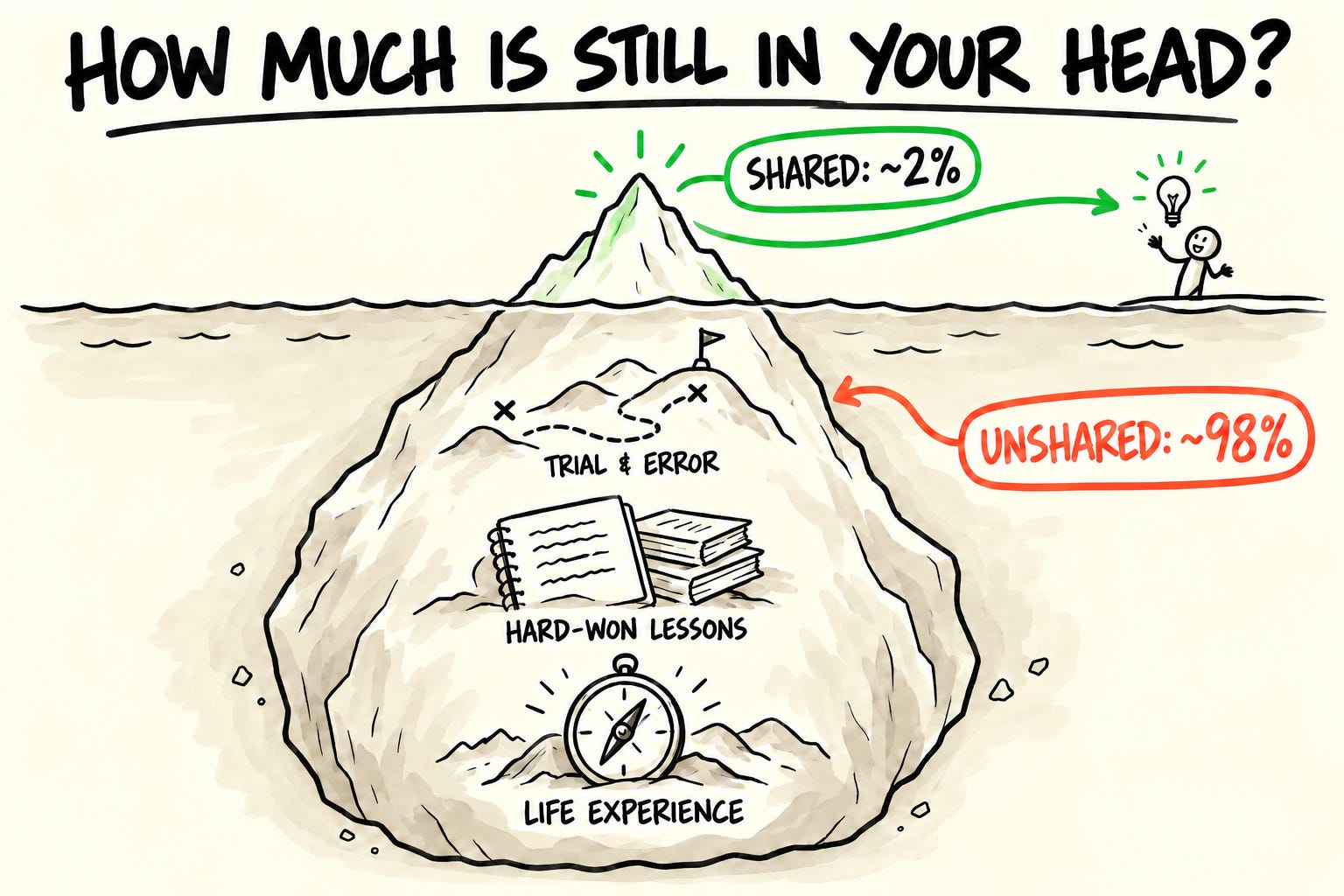
It’s like owning a vacation home and staying there one week a year. The other 51 weeks, the house sits empty.
What Airbnb and Uber did for houses and cars sitting idle, we need to do for breakthrough knowledge.
So, what causes this waste?
In my opinion, the answer comes down to three core challenges. If we solve these challenges, then 2% could become 20% and then 50%, and the next quake book that changes someone’s life could come from you.
The 3 Challenges That Destroy Our Knowledge Society
While most people complain about the costs of fake news on society, they miss deeper architectural challenges that limit humanity’s growth:
The curse of knowledge
The “obvious to you” trap
The cocktail party problem
Challenge #1: The Curse Of Knowledge
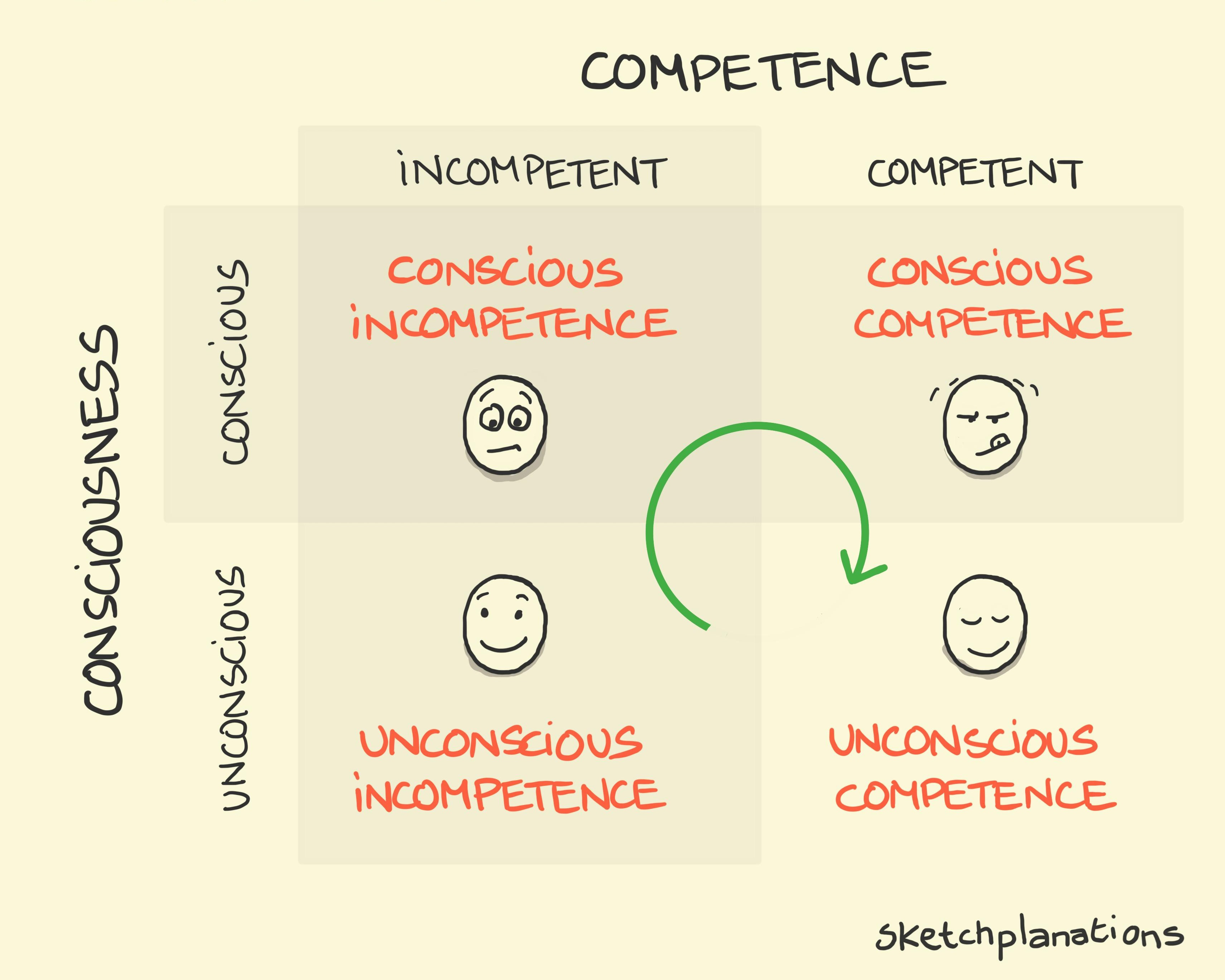
It is the nature of mastery to go through four steps:
Unconscious incompetence
Conscious incompetence
Conscious competence
Unconscious competence
Shown visually, it looks like this:
Unconscious competence is amazing.
When someone spends decades on mastery, they can do things that seem magical to others. For example, Magnus Carlsen can play several games of speed chess at once, blindfolded, and win.

We all have this seemingly magical ability. And, in Successful People Are Not Necessarily Smarter. They Just Do More Of This, I explain how this process works.
Take reading, for example.
If we had to read every pixel or every letter in a word, no one would read. It would be too laborious. But, because of unconscious competence, we can simply look at a word and see the image the word represents.
For example, if I say that I saw an elephant skinny-dipping in a pool, you could immediately see a visual rather than having to make out each of the 28 letters, combine them into 6 words, and then turn those words into a visual.
Because we spent years learning how to read, one stage at a time, we do so effortlessly and instantly.
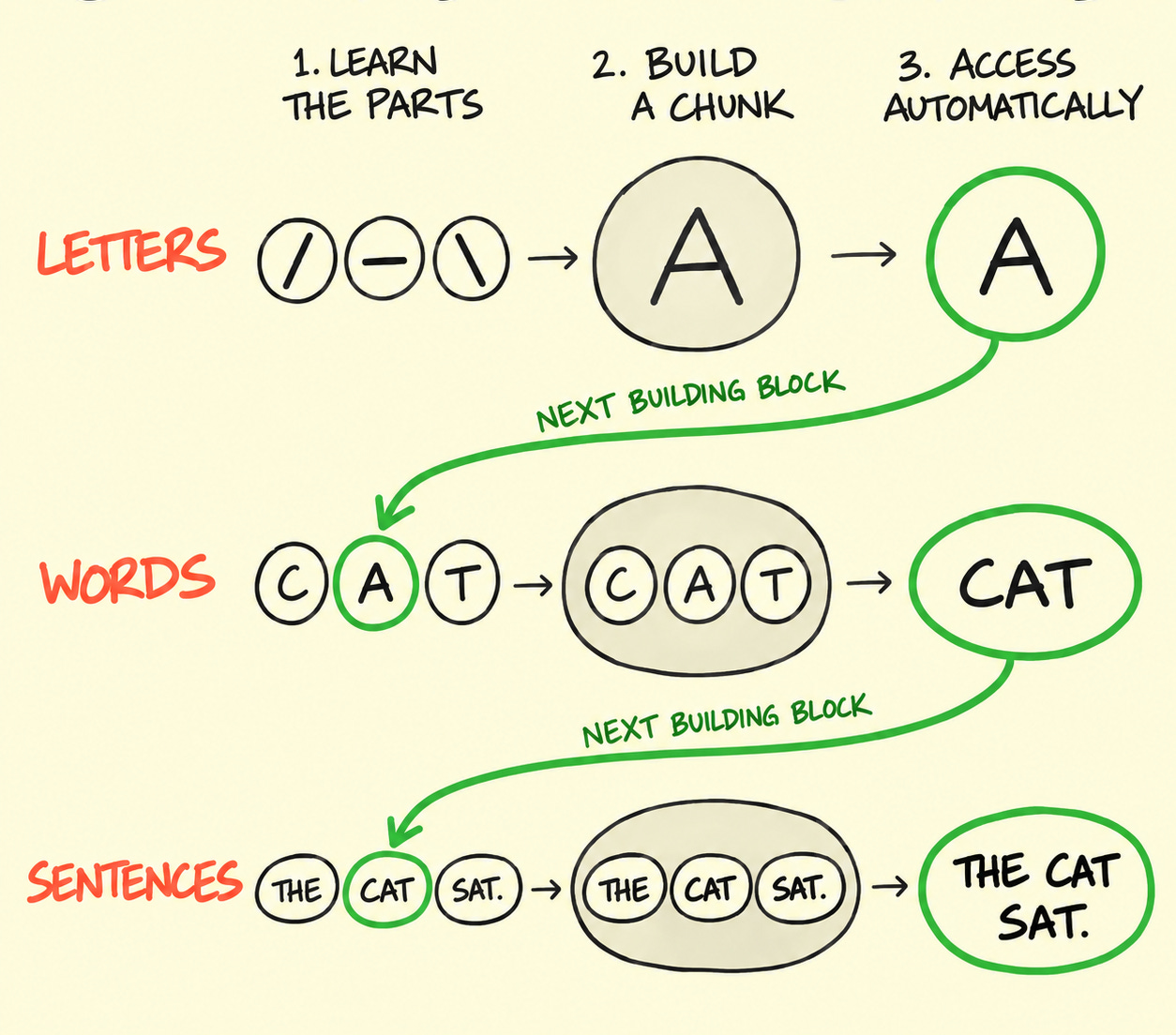
Here are the stages of the mastery process:
Letters. Realize that some shapes represent a class of things called the alphabet.
Words. Realize that some of these letters represent words. And every word has meaning.
Sentences. Realize that some words can be combined into a meaningful sentence.
At each stage, we consciously learned the key chunks (e.g., letters, words, sentences). Now, we’re able to access those chunks automatically without having to piece the parts together.
But, unconscious competence comes at a cost.
What we gain in speed, we lose in conscious awareness. And conscious awareness is critical for teaching others what we know.
For example, you’ve probably had the experience of trying to learn the beginning baby steps of a field, and the expert explains what they do like this:

As a result, you’re left completely confused. This is why many of the best players in sports are not actually the best coaches.
It takes time and effort to turn our unconscious, implicit knowledge that we use automatically into something we’re consciously aware of and can teach others about.
In my experience as a teacher, it takes at least three live cohorts for me to conquer the curse of knowledge and clearly articulate everything step by step.
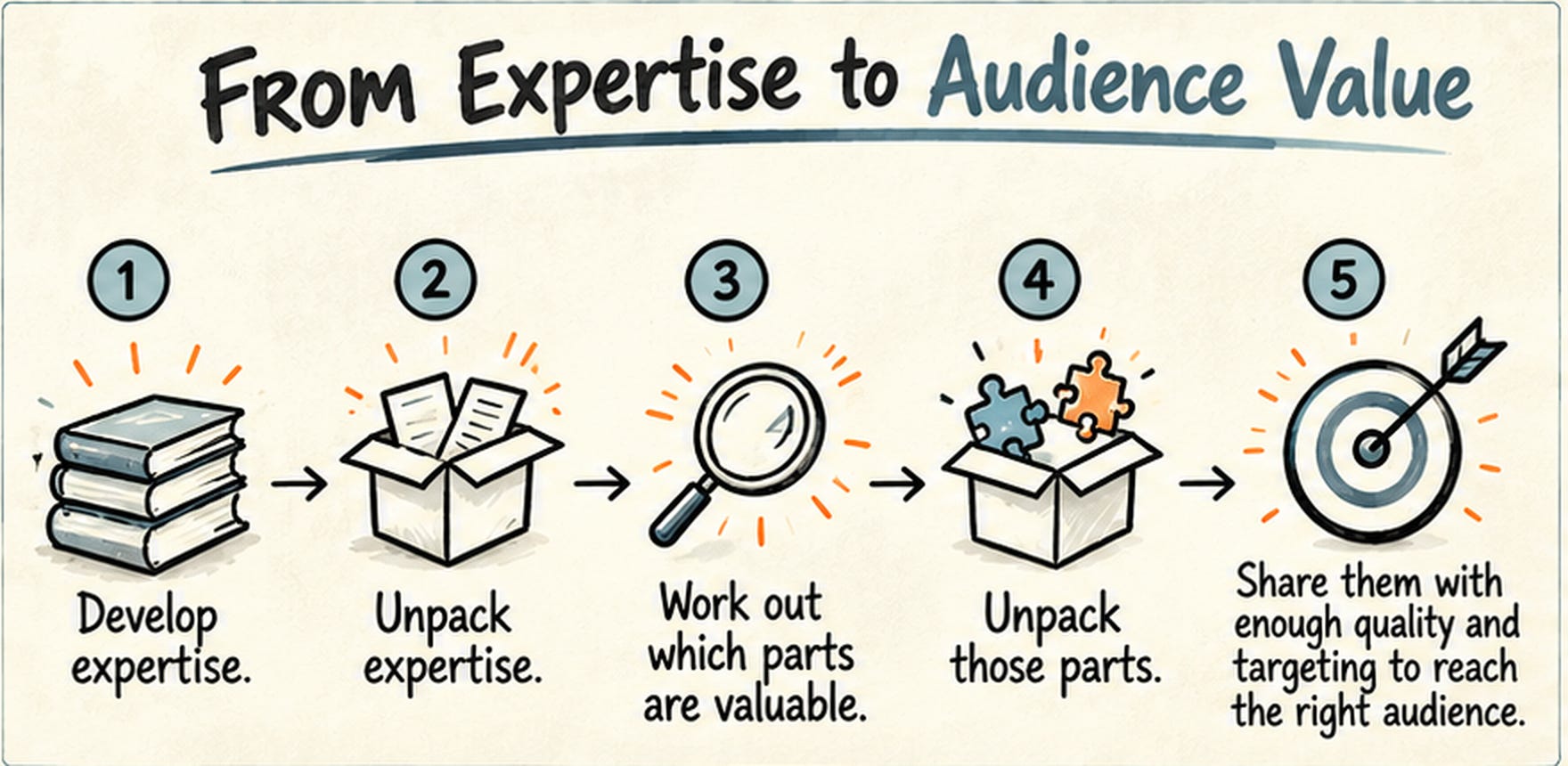
Bottom line: To successfully share what we know with others, we need to conquer the curse of knowledge.
Challenge #2: The “Obvious To You” Trap
The things that are most obvious to us are often not obvious to other people. As a result, we often don’t share our most valuable knowledge.
Derek Sivers, the founder of CD Baby, named this problem in a 2010 blog post called “Obvious to you. Amazing to others.” A reader once emailed him to say one of his ideas was genius and to ask how he’d come up with it. Sivers wrote back explaining why the idea was nothing special. Then he realized that everyone’s ideas seem obvious to the person who has them. He points out that songwriters often say their biggest hit was a song they nearly threw away.
The trap is that our ideas feel obvious for the same reason they’re valuable: we’ve used them so often that they’ve become second nature. Unconscious competence strikes twice. It makes our knowledge hard to explain, and it makes that same knowledge feel too obvious to be worth explaining.
Think of the question people ask you most often, the one you could answer in your sleep. You probably don’t think of that answer as anything special. The person asking does. That’s why they asked.
This is the “obvious to you” trap in action. The more fully you’ve mastered something, the more ordinary it feels, so the knowledge that would be most valuable to other people is often the knowledge you’re least likely to share.
Bottom line: To share our most valuable knowledge, we need to stop dismissing it as obvious.
Challenge #3: The Cocktail Party Problem
Once we have a valuable idea clearly articulated, we have to somehow break through all of the noise on the Internet. This means we need two things:
Quality. Creating something high-quality so that it stands out.
Targeting. Ensuring that the idea gets to the right people who would value it the most.
At a crowded party, with dozens of conversations going on at once, how do we manage to follow just one?
In 1953, a scientist named Colin Cherry studied that question and gave it a name: the cocktail party problem.
You’ve been there. You lock onto the person in front of you, and the rest of the room blurs into background noise. Some of those other conversations may be brilliant, but you’ll never know.
The Internet is the biggest cocktail party in history, and every reader is doing the same thing: tuning in to a few voices and tuning out the rest.
Cherry was studying the listener’s problem. As experts, we have the speaker’s version of this problem: how do we become the voice someone tunes in to?
Becoming that voice takes both quality and targeting. You have to say something worth hearing, and you have to say it where the right people are listening. Both take skills most experts never had a reason to learn.
As a result, brilliant ideas get drowned out by louder, more polished voices saying much less.
Bottom line: To break through the noise, our ideas need both quality and targeting.
Summary
With enough time and specialized thought leadership skills, it’s possible to overcome these challenges. But, “time” and “skill” are the keywords here. Most people don’t have the time.
Even for those who do, the value exchange rarely adds up. Learning thought leadership takes thousands of hours, and almost none of the platforms pay anything for the content. Few experts will spend the time to distill their knowledge for something like $18 an article.
There are other benefits to sharing your wisdom, like a stronger reputation and new clients. But those benefits only outweigh the cost when creating content is fast and cheap. So as content creation gets cheaper and faster, we should see far more experts sharing what they know.
With the advent of AI, that drop in cost has already begun.
This September 22 AI Update Makes It Possible For Experts To Break Through
On September 22, something big happened that few people realized.
Anthropic released Claude Opus 5.5, which was good enough to generate super high-quality explainer videos that would normally cost thousands of dollars to create. Immediately, I saw my X feed filled with super high-quality, viral AI-generated videos and early adopters going crazy for them:

“Claude Opus 5.5 has the best visual design of any model I have tested so far.”


“…this is genuinely mind blowing.”

“These models are getting ridiculously powerful.”

“I’m still not sure people are fully getting how good opus 5.5 [is]…”

Seeing all of these videos, I immediately understood the implications:
If I could explain a rough idea to AI, it could turn that idea into a video that looks really good.
So good that I could post it on YouTube.
What this means is that there is a window of opportunity right now where it’s possible for creators to create the best video in the world in their niche with relatively little effort.
Over the last month, I’ve been proving this out, and I’m completely blown away. I’ve gone from someone didn’t create videos to someone who feels like a video creator.
This Was The Moment Where It First Clicked For Me
Near the end of the first Mastermind session for the Agentic Academy on October 2, I played a short video I’d made with AI:
Using an AI video skill I found online along with an example video that reflected the style I wanted, I simply said:
I want to create a video in the style of [XYZ], but with clips from the ones I’ve curated in /ClaudeCode/snipd/data, and on a topic related to my thought leadership. Please use elevenlabs v4.
The video clips I curated are ones that I had saved over two years with Snipd. In total, I had saved 1,500+ clips, but I had only shared a few dozen of them.
Amazingly, it took one simple prompt and just two rounds of basic edits to create something that would normally have cost $10,000+ and taken hundreds of hours.
When I shared the prompt and the end result, the room reacted quickly as people realized two things:
Insight #1: They could also build amazing videos for themselves:
Video trailers for their ideas/books/articles.
Explainers for the frameworks they teach.
Sales videos and personalized pitches for their offers.
Insight #2: They were also sitting on a pile of unused material they could turn into amazing videos:
Video clips they had collected over the years.
Video recordings of coaching calls.
Video recordings of sales calls.
Video recordings of classes.
Raw video riffs never used because they required too much editing.
Client testimonials.
Photos.
Book excerpts they’ve collected.
Each of us already has the raw material. What we’ve been missing is a fast way to turn it into a finished video.
Now, you might be wondering, great, I can do video, but why is that special…
6 Surprising Ways Video Can Take You To The Next Level As A Thought Leader And Entrepreneur
Video has a few big advantages over text:
People generally prefer video over text.
You can post video everywhere (including the #1 content platform in the world).
Video makes learning easier and more fun.
Videos can help you close deals.
Video can help you repurpose your IP.
People can interact with your ideas.
#1. People Generally Prefer Video Over Text
Mark Zuckerberg probably has a better view on what forms of media people prefer than anyone else. And, over the last 22 years, he has witnessed people’s preference for video dominate where they put their attention:
By creating in video, you can stand out more in the newsfeed.
#2. You Can Post Video Everywhere
The #1 video creator in the world explains the unique power of the medium:
For years, I’ve wanted to create videos and post them on YouTube, the #1 content platform on the Internet by far. I even saw some people use my articles and turn them into videos with millions of views. But, I knew the perils of spreading myself too thin, and I decided to specialize in text content.
I’m not alone. Most experts aren’t video producers. But now that AI is really good at video, it’s possible for anyone to tap into the largest audiences on the Internet.
#3. Video Makes Learning Easier And More Fun
As an example, consider this book summary I created for a very technical book.
Or this mental model explainer:
Animation lets someone watch an idea unfold, step by step.
#4. Videos Can Help You Close Deals
In today’s world, reaching people individually through text is hard, because everyone’s inboxes are crowded. But, imagine being able to record personalized videos at scale. You could include them in:
Personal DMs
Before and after sales meetings
Sales proposals
For example, I recorded the following video real quick while I was on vacation in NYC to show how AI could turn a raw riff into something that looks super professional:
Imagine recording personalized, highly produced videos like these for your prospective and current clients.
Video can also be used to announce new product features or events. For example, here’s one my Mastermind co-teacher, Wyndo, made with Claude to announce the October 23 session:
#5. Video Can Help You Repurpose Your IP
You’ve spent decades building up your Trademark Ideas and intellectual property based on research, experience, and experimentation. You’ve spent hundreds or even thousands of hours turning that IP into a body of work (content, courses, coaching). You might have even reposted your articles across different platforms. But now what? How do you continue re-promoting the same ideas?
Turning all of your best ideas and articles into videos gives them a whole new life for very little effort. You’ve already done the hard work.
For example, this past month, I turned a 10,000-word article into a 1-hour mini documentary. Below is the first act:
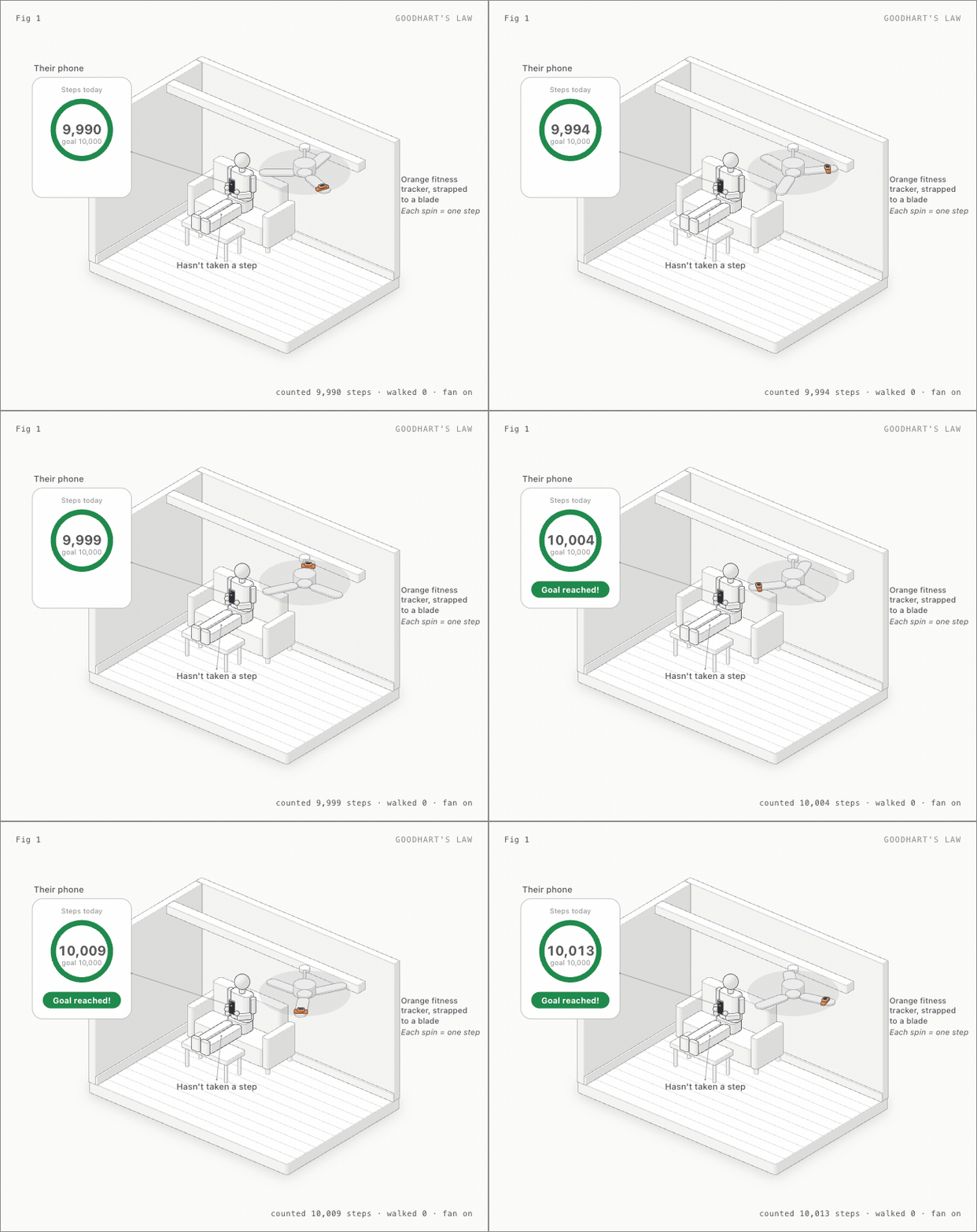
I also created a 3-minute overview of one of the most important mental models in the age of AI, Goodhart’s Law:
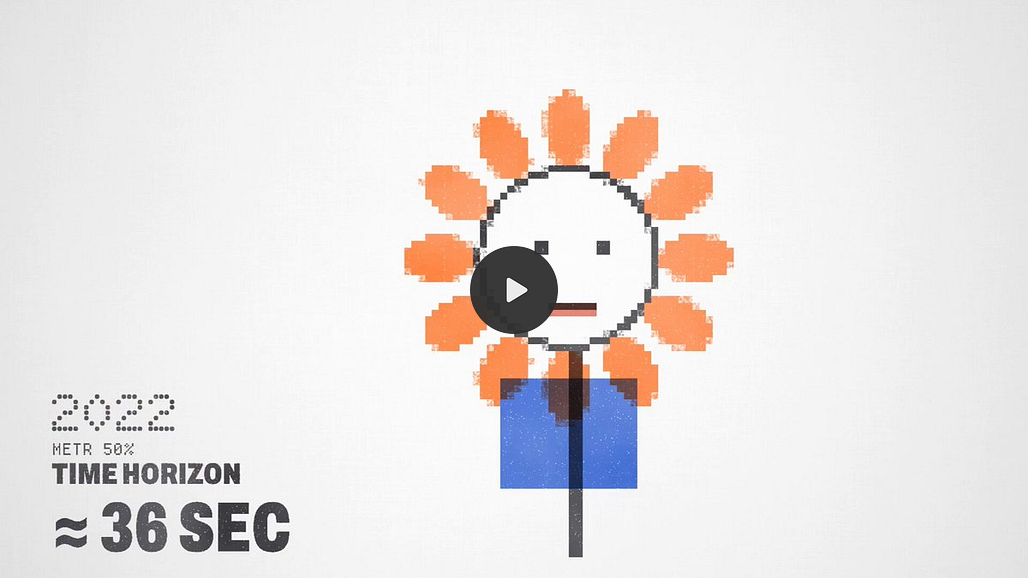
I also turned The Chat Trap: Why the Smartest AI Users Are Working the Hardest into a 5-minute explainer:
I turned another forthcoming 10,000-word article into a video as well:
And, I even turned an interesting chat I was having about AI into a fascinating explainer on leverage:
#6. People Can Interact With Your Ideas
There is also a new category of interactive video explainers, where you can actually interact with the video to explore possibilities.
For my first interactive explainer, I created one for Goodhart’s Law:
Those are just some of the videos I’ve created in my first month. Once you realize what you can do with videos, you’ll find more and more areas in your business where you can use them…
20 Ideas For Videos You Could Make
Attract Attention
Article or newsletter teaser: a short video that makes people want to read a new article, issue, report, or ebook.
Article or essay video: a written piece (essay, article, speech, story) turned into something to watch.
Book trailer / launch video: makes people want a new book, giving them the big idea, the author, and a reason to buy now.
Short vertical video: under a minute, for phones, built to stop the scroll in the first second.
Spoken-word / quote film: one voice, one idea, with images or type built around the words.
Teach
Framework explainer: one big idea of your own, explained in a few minutes, so it sticks and spreads.
Animated adaptation: an existing interview, podcast, lecture, or how-to retold with animation.
Book summary / idea breakdown: the key ideas of a book, usually as drawings or animation over narration.
Data story: animated charts and numbers that carry an argument over time.
Video lesson: a short teaching unit, built so a viewer learns one thing well.
Sell
Free training / launch lesson: a free teaching video, often one in a short series that leads into a paid program.
Course trailer: a preview of a course or program, showing who teaches it, what you’ll be able to do after you’ve finished, and a taste of the teaching.
Launch announcement: the polished reveal of a new product, feature, or event, like the one Wyndo made for our upcoming October 23 mastermind session.
Offer sales video: sells one product or program directly by showing the offer and the transformation.
Personal pitch video: made for one specific person or company, such as a prospect, partner, sponsor, or employer.
Upgrade Footage You Already Have
You don’t need to film anything new. If you already have recordings, Claude can make them look far more polished, adding animated titles and graphics timed to what you’re saying, plus B-roll (cutaways to images or to your other clips).
Raw riff, finished: a recording of you thinking out loud, turned into a video that looks professionally produced.
Call or class clip: the standout minute from a coaching call, class, or podcast, shared on its own.
Customer story: a recorded client testimonial, turned into a short story about what changed for that client.
Event sizzle / recap: a fast montage that makes viewers wish they’d been there.
Supercut / montage: clips you’ve saved over time, cut together to reveal one pattern or theme, like the video I played on October 2.
Ideas are the easy part. The hard part is the gap between “I could make that” and a finished video: choosing a style, planning the scenes, and getting Claude to build what you pictured. Our next Mastermind session is built to close that gap.
Make Your First Video On October 23
On Friday, October 23, from 11:00am to 2:00pm ET, Wyndo and I will show you how to make animated videos, starting from material you already have.
Here’s what we’ll cover in the second Mastermind session:
What Claude can make now. We’ll show a range of formats, like animated explainers, framework breakdowns, launch videos, and book trailers, so you can see what’s possible before you choose.
Your first explainer video. Pick one idea you teach often. You’ll turn it into a short animated video during the session.
Finding a style you like. Most of us can’t name the visual styles we like. We’ll give you a simple way to collect examples, mark what you like about each one, and turn those notes into a style Claude can follow.
Planning your video scene by scene. Before Claude builds anything, you’ll lay out a storyboard, scene by scene, so the result matches what you pictured.
Starting from your own recordings. You’ll give
/video-builder, Wyndo’s new skill, a transcript of a class, a call, or a voice note. The skill finds the strongest point and turns that point into a video. We’ll also show you how to work from the footage itself, so Claude can add animated titles, graphics, and B-roll to a video you’ve already recorded.Where to use your videos. Posts, course lessons, pitches, client follow-ups, and launch announcements.
What You’ll Leave The Session With
Your first animated explainer video, made during the session.
/video-builder, a skill that reads a transcript, finds its strongest point, and turns it into an animated video. The skill is yours to keep for every video after this one.The recording and full resources: transcript, chat, links, chapter guides, summary, and tutorials.
From Your First Video To Your Tenth
You’ll leave on October 23 with your first video and a skill that helps you create the next one. But the first video is the easy part. The hard part comes a week later, alone at your desk, when something breaks, the style drifts, or you can’t decide what to make next. That’s where most people stall, lose momentum, and quietly stop.
This 3-hour session is part of our year-long Mastermind, where members get ongoing support as they use the tools they’re learning. That includes:
Build Clinics. Two 90-minute Build Clinics follow the October 23 session. Bring a video that isn’t working, an idea you’re not sure how to storyboard, or a question you’d feel awkward asking anywhere else, and we’ll work through it with you live. Every clinic is recorded.
Show & Tell. Once a month, show off what you’ve built and get live coaching on your work. You’ll also see how other members used the same tools, and you can borrow what fits your own business.
WhatsApp community. Ask as many questions as you like between calls, and get an answer from us within 48 hours.
One-on-one support. Bonnie Johnston, who leads one-on-one support for the Agentic Academy, is available to work with you directly if you get stuck.
With that support, your first video begins a habit of video creation, because you’ve got all the help you need until you’ve mastered the process.
Here’s what Michael P., one of our students, had to say about what this level of support meant for him:
“The high touch kind of concierge meetings were very important for me to be able to ask the dumb questions, to be able to have somebody kind of, hey, that piece you need, I’m going to go get it for you. I’m going to come back. I’m going to send it to you. And then we’re going to spin it up. And then you’re going to see it in action. And the more …handholding, the more chance of success.”
Who The Mastermind Is For
The Mastermind is built for active AI users who aren’t technical. You don’t need to be a designer, a coder, or a video editor.
You’ll get the most out of it if some of these sound like you:
You’ve started letting AI work directly on the files on your computer, with tools like Claude Code and Codex.
You have recordings, talks, or ideas you’ve never had time to turn into anything.
You keep seeing AI demos and thinking “I could use that,” but you’re not sure how to build your own version.
You learn best by building, not by watching.
You want new income from what you already know.
The Mastermind isn’t for you if:
You’re brand new to AI. We assume you already use ChatGPT, Claude, or a similar tool regularly.
You want a roundup of AI news. We go deep on one breakthrough a month instead.
You’d rather watch than build. The value comes from putting each month’s breakthrough to work.
Here’s what Mastermind member Leandra W. had to say after our October 2 session:
“…What I love about the class is that we are always getting information right as it comes out and then taught how to use this.
…being able to do it in class and do it with other people doing it and hearing what they were doing was really inspiring and really helped stay on task. We have the WhatsApp. You can just connect with other people and ask. Everybody’s really generous about sharing how they’re moving through things.
…I was super overwhelmed. I don’t even know where to start. And then it’s like, ‘oh, oh, this is okay. This is actually kind of a breeze once you know how to do it.’
I feel like there’s this window and it will be closing. But if you act now, it’s a prime opportunity.”
Two Ways To Join
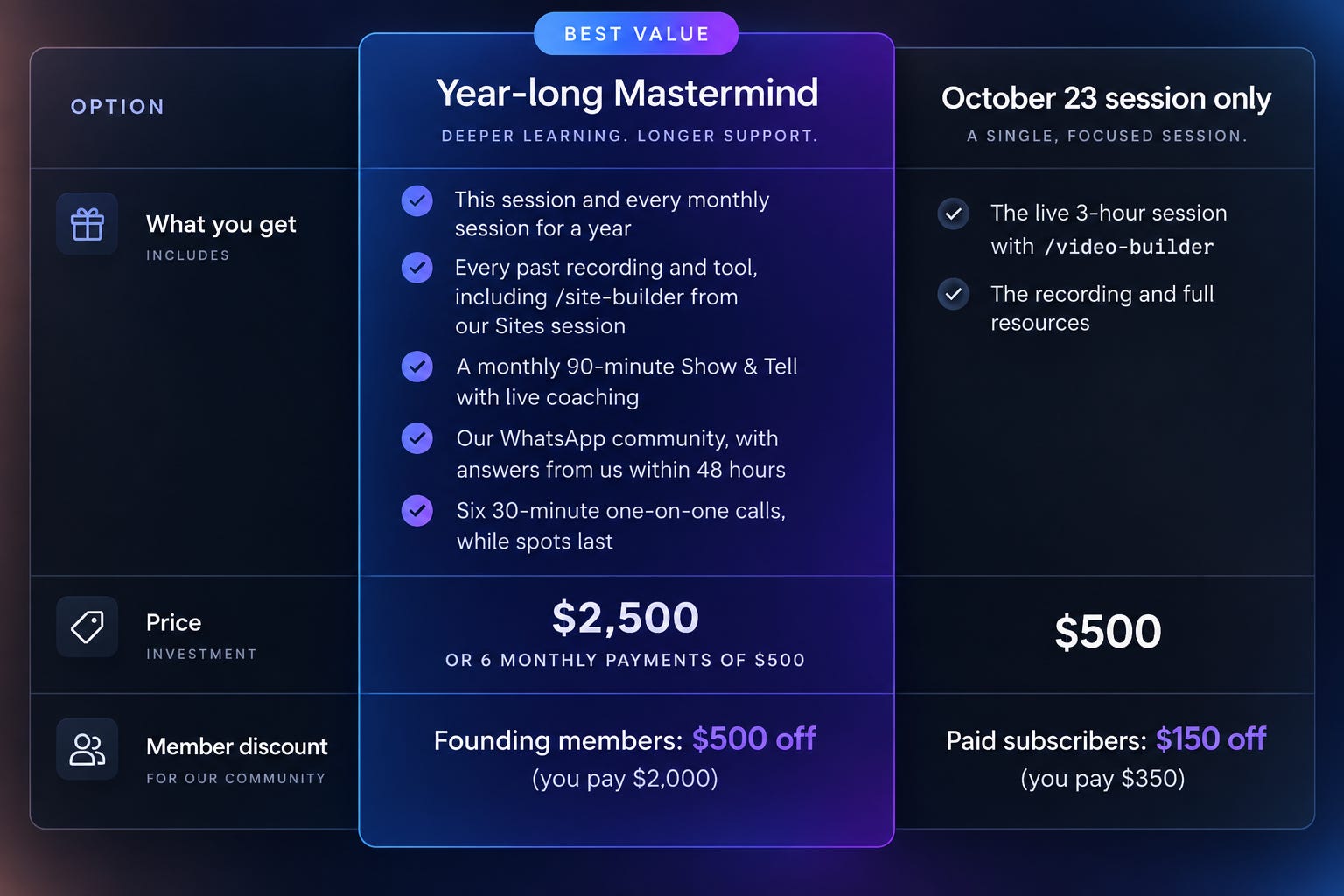
Member discounts are for subscribers of AI Maker or Blockbuster Blueprint. If you qualify, we’ll email you your code.
The full year saves you 50%+. One session is $500, so twelve would cost $6,000. The full Mastermind is $2,500 for all twelve, plus everything we’ve already covered.
Starting with one session? You can upgrade to the full year later at a discount.
Doors close when the session starts: Friday, October 23, at 11:00am ET.
FAQ
Do I need to know how to code or design? No. You describe what you want in plain English, and Claude creates the video. The style exercise and the storyboard take care of the design decisions you’d otherwise struggle to put into words.
Do I need to be on camera? No. Most of the videos you’ll make are animated, so your ideas carry them, not your face. If you do have footage of yourself, Claude can work with that too.
I use ChatGPT. Can I still join? The free video tool we use also works with ChatGPT, but we’ll teach and build in Claude, so you’ll get the most from the session if you’re on a Claude plan. The Mastermind itself isn’t tied to one AI model: on October 2, we built in ChatGPT, and each session uses whichever tool does the job best.
What if I can’t attend live? Every session is recorded, with the transcript, chat, links, chapter guides, summary, and tutorials.
What will future sessions cover? We choose each month’s topic based on which AI breakthrough has just become most practical and valuable, so we don’t lock in the year in advance. We’ll announce each topic ahead of the session and tell you what it requires.
When does the Mastermind year run? From October 2026 through September 2027, with one 3-hour session each month.
Can I join the Mastermind after October 23? Yes. You can join anytime, and you’ll get the replays of the sessions and Build Clinics you missed. Join before October 23 to take the video session live.
What if I’m not sure about the year-long commitment? If you’d rather start with just one session and decide later, you can join the October 23 video-creation bootcamp by itself for $500. You’ll get the live session, /video-builder, and the recording with all its resources.
The single session doesn’t include the October 2 replay, the Build Clinics, Show & Tell, the WhatsApp community, the one-on-one support, or the other ten sessions. If you decide to upgrade later, the upgrade will be $2,250.
Single-session sales close when the session starts: Friday, October 23, at 11:00am ET.
How is this different from the 10-week Agentic Academy cohort? The cohort teaches the fundamentals of working with AI agents. The Mastermind keeps you current after that, going deep on one new breakthrough each month.
What’s the refund policy? Make a video with what you learned within 30 days. If you don’t, email support@thoughtleader.school within those 30 days and we’ll refund you in full. If you’re on the payment plan, we refund what you’ve paid and cancel the remaining payments.
What did the last session cover? On October 2, we built websites with ChatGPT Sites. Read the recap. Full-year members get that session’s replay, /site-builder, and the replays of the two Build Clinics that followed, the day they join.
Your best ideas are already sitting in your recordings. On October 23, we’ll help you turn one of them into a video people will actually watch.
Join for the year, and we’ll be there for the next video, and for every breakthrough after that.
PAID SUBSCRIBERS:
Skills To Download
Unlocking AI video comes down to finding the right skills to use. I’ve experimented with a lot of the ones out there, and these three are the best I’ve found.
By becoming a paid subscriber, you get my three picks and step-by-step instructions for installing them, plus AI courses, premium prompts, mental model manuals, and everything else that comes with a paid subscription.